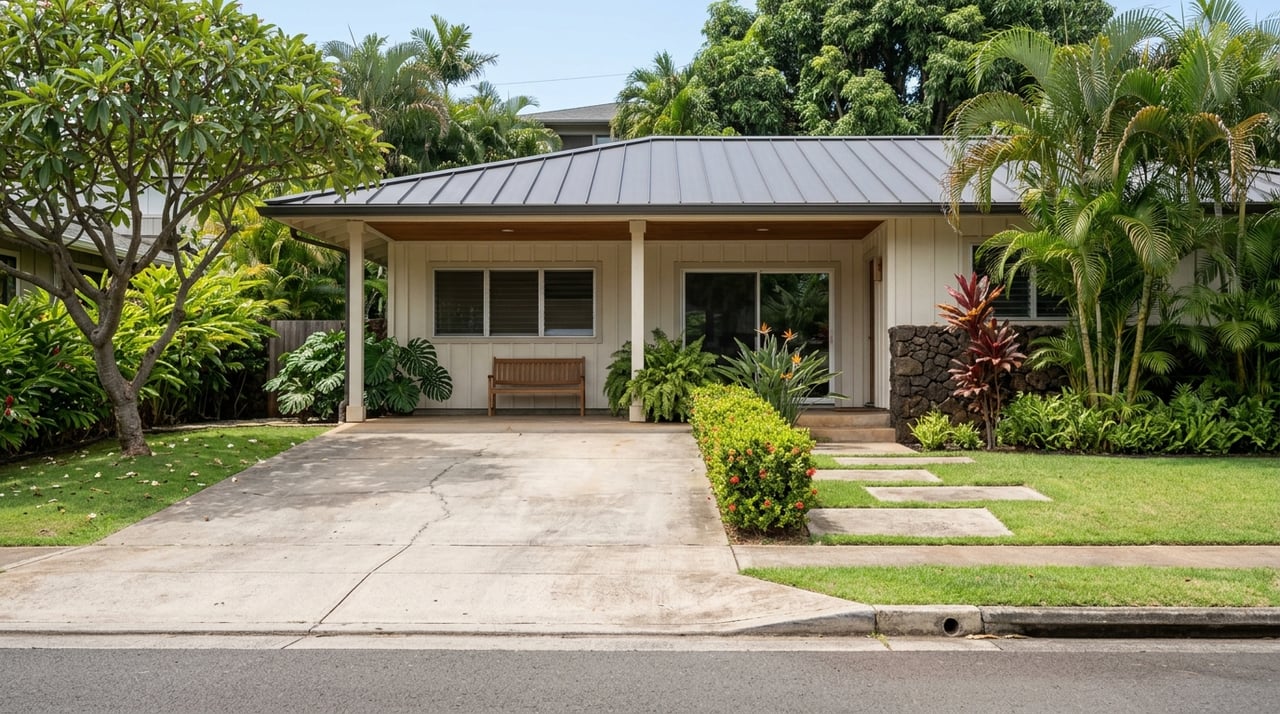
If you are looking for a Honolulu neighborhood that feels established, practical, and built for staying put, Niu Valley stands out. Many buyers are not chasing the newest or busiest area. They want a place with residential stability, nearby conveniences, and a familiar sense of community. That is exactly why Niu Valley continues to appeal to long-term residents, and this guide will show you what makes it different. Let’s dive in.
Niu Valley feels built for the long haul
One of the clearest signs of Niu Valley’s long-term appeal is its housing profile. According to Point2’s neighborhood demographics, the area has 4,133 residents and 1,555 housing units, with 85.7% owner-occupied homes.
That matters because high owner-occupancy often points to a neighborhood where people put down roots. In Niu Valley, the housing stock also leans heavily residential, with 86.2% detached single-family homes. For many Honolulu buyers, that creates a more settled feel than you may find in denser, higher-turnover parts of town.
The same profile shows a median construction year of 1969, which reflects a neighborhood shaped largely in the second half of the 20th century rather than by recent waves of large-scale development. If you value established streets, mature surroundings, and a neighborhood that has had time to develop its own rhythm, that can be a real draw.
The neighborhood has a steady residential character
Niu Valley is not known as a commercial destination district, and that is part of the appeal. It reads first as a place where people live, not a place built around constant activity or visitor traffic.
The demographic picture supports that impression. Point2 also reports a median age of 50, with 28% of residents over 65, which adds to the sense of continuity and long-term homeownership in the area. For buyers who want a calmer East Honolulu setting, that profile can feel reassuring.
This does not mean Niu Valley is isolated. Instead, it offers a residential base that still keeps you connected to the rest of East Honolulu. Many long-term residents appreciate that balance because it supports daily life without feeling overly busy.
Parks and trails are close by
Another reason people stay in Niu Valley is that outdoor recreation is easy to reach. You do not have to give up access to green space and hiking just because you want a quieter residential setting.
The City and County of Honolulu lists Niu Valley Neighborhood Park at 5510 Kanau St., with two tennis courts. For many households, having a neighborhood park nearby adds simple, everyday value. It gives you an easy option for getting outside without planning a full-day outing.
For bigger adventures, the State of Hawaiʻi’s official Oʻahu trails page highlights several nearby East Honolulu options. Kuliʻouʻou Ridge Trail is listed at 2.5 miles and includes a shelter with two picnic tables at the summit area, while Wiliwilinui Access Road and Trail is listed at 3.0 miles with access off Laukahi Street after security check-in.
That combination is part of Niu Valley’s lifestyle appeal. You can enjoy neighborhood-scale recreation close to home, while also having access to popular ridge and valley trails when you want a larger outdoor outing.
East Honolulu errands are convenient
Long-term livability often comes down to ordinary routines. Where do you go for groceries, a quick meal, banking, or other practical stops? In Niu Valley, many of those needs can be handled nearby on the east side.
The Āina Haina Shopping Center is located at the intersection of Kalanianaʻole Highway and West Hind Drive and lists tenants including Foodland Farms, a U.S. Post Office, banks, fitness, and dining options. That kind of convenience can make day-to-day life feel much easier.
The research also notes that Hawaii Kai Towne Center is at 333 Keahole St. and includes Costco Wholesale, Ross Dress for Less, City Mill, dining, banking, and other services. Together, these nearby commercial areas support the kind of low-friction routine many long-term residents want.
Instead of feeling like every errand requires a trip into central Honolulu, Niu Valley gives you a more practical East Honolulu base. For many homeowners, that convenience is one of the biggest reasons the neighborhood works well over time.
Community history adds staying power
Niu Valley’s appeal is not only about housing and convenience. It also has a visible sense of community continuity that helps explain why residents stay.
A local Honolulu Star-Advertiser neighborhood profile described Niu Valley as a neighborhood developed in the 1960s on former agricultural land. The same report noted a neighborhood-wide email network used by the community association for updates including crime reports and legislative issues.
That kind of infrastructure says something important about the area. It suggests residents have invested time and energy in staying informed and connected. For buyers who value a neighborhood with an established identity, that can be just as meaningful as square footage or lot size.
The same local reporting referenced a 12-year effort to build the neighborhood playground. That story points to a deeper pattern of resident persistence and long-term commitment to place, which often matters to people who want more than just a house.
Schools support long-term planning
For many buyers, access to nearby public schools is part of evaluating whether a neighborhood can work over the long term. In Niu Valley, the nearby public school options add another layer to the area’s residential appeal.
The Hawaiʻi Department of Education says Niu Valley Middle School is located at 310 Halemaumau St. and is an International Baccalaureate World School. The DOE also notes that it is the only public middle school in Hawaiʻi to offer the Middle Years Programme.
The DOE also lists Kalani High School at 4680 Kalanianaʻole Highway and recognized it in 2025 as a Hawaiʻi School of Democracy. For households thinking about long-term planning, having established public schools nearby can be part of what makes Niu Valley feel practical and predictable.
It is important to evaluate any school based on your own needs and current official information. Still, from a neighborhood perspective, the presence of these nearby public campuses adds to Niu Valley’s sense of permanence and structure.
The area reflects a strong sense of place
Niu Valley also benefits from nearby cultural and environmental touchpoints that reinforce its local identity. These features help the neighborhood feel connected to Hawaiʻi’s landscape and history, not just to housing patterns.
The City’s Hanauma Bay Nature Preserve notes that the preserve was designated Hawaiʻi’s first Marine Life Conservation District in 1967 and is jointly managed by the City and the State. While Hanauma Bay is a broader East Honolulu destination, its presence contributes to the area’s outdoor and environmental character.
The Department of Land and Natural Resources also shared an update on Niu Fishpond restoration, describing work along busy Kalanianaʻole Highway in Niu Valley to restore an important traditional aquaculture resource. For many residents, that kind of heritage work strengthens the neighborhood’s sense of place over time.
Who Niu Valley tends to attract
Based on the neighborhood’s housing mix, owner-occupancy, and nearby amenities, Niu Valley often appeals to buyers who are thinking long term. It tends to make sense for people who want an established East Honolulu neighborhood rather than a fast-changing, high-density environment.
That can include local households looking for a stable residential base, buyers who value nearby parks and trails, and those who want daily conveniences within East Honolulu. It can also appeal to homeowners planning for a longer timeline, including those who prioritize familiarity, routine, and a more traditional single-family setting.
In other words, Niu Valley is not just about location on a map. It is about a lifestyle that feels steady, connected, and well-suited to people who want to stay.
Why this matters if you are buying or selling
If you are buying in Niu Valley, it helps to understand that the neighborhood’s value is tied to more than inventory. Its appeal comes from long-term ownership patterns, a predominantly single-family setting, nearby outdoor access, and the practicality of East Honolulu conveniences.
If you are selling, those same qualities can shape how your home should be positioned. Buyers considering Niu Valley are often looking for neighborhood fit as much as property features. A thoughtful marketing strategy should speak to both.
Whether you are planning a move, exploring your options, or preparing to sell, working with someone who understands how Niu Valley fits into the larger Honolulu market can make a real difference. If you want neighborhood-specific guidance, connect with Laura Ing Baker for personalized support grounded in local experience.
FAQs
Why does Niu Valley appeal to long-term Honolulu residents?
- Niu Valley appeals to long-term residents because it has a high owner-occupancy rate, a predominantly detached single-family housing mix, nearby parks and trails, and convenient East Honolulu shopping and services.
What type of housing is most common in Niu Valley, Honolulu?
- According to Point2 demographics, 86.2% of Niu Valley homes are detached single-family homes, and 85.7% are owner-occupied.
What parks and outdoor recreation are near Niu Valley?
- Niu Valley offers access to Niu Valley Neighborhood Park with two tennis courts, and nearby East Honolulu trail options include Kuliʻouʻou Ridge Trail, Kuliʻouʻou Valley Trail, and Wiliwilinui Access Road and Trail.
What shopping and services are near Niu Valley?
- Nearby errand and shopping options include Āina Haina Shopping Center and Hawaii Kai Towne Center, which offer groceries, dining, banking, postal services, and other everyday essentials.
What public schools are listed near Niu Valley?
- The Hawaiʻi Department of Education lists Niu Valley Middle School on Halemaumau Street and Kalani High School on Kalanianaʻole Highway as nearby public school options.
Is Niu Valley a good fit for buyers seeking a residential Honolulu neighborhood?
- Niu Valley may appeal to buyers who want an established East Honolulu residential setting with long-term ownership patterns, nearby conveniences, and access to outdoor recreation.
