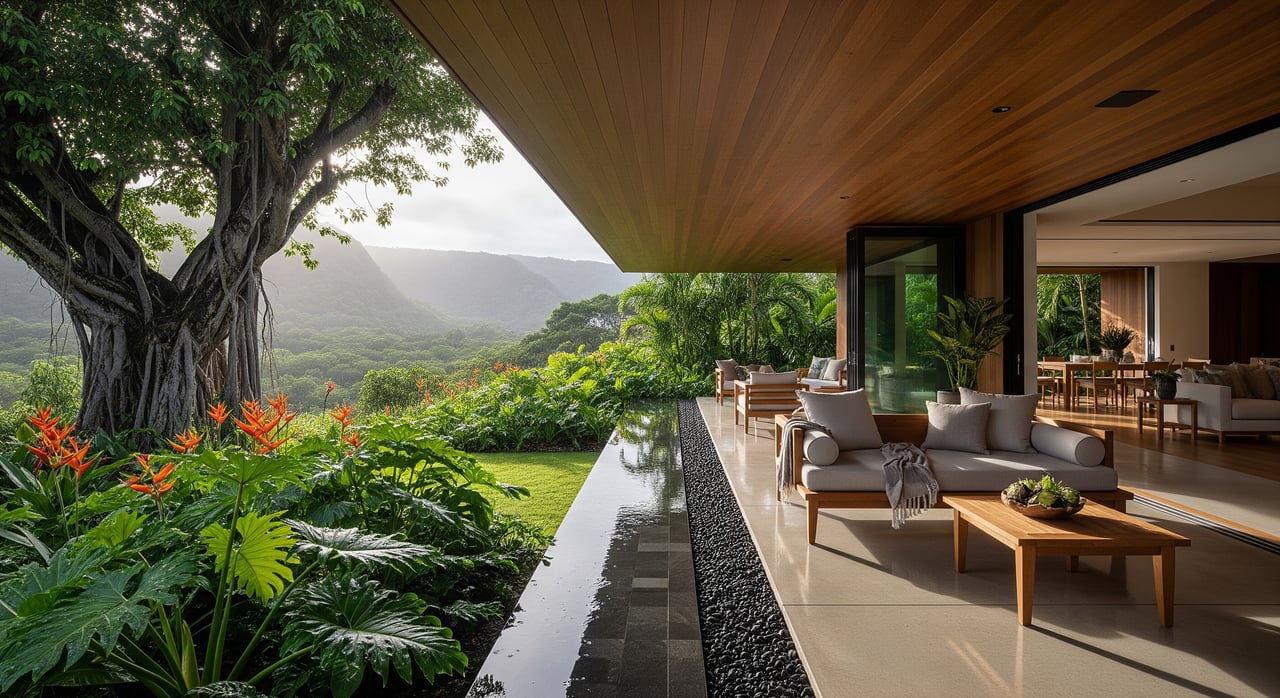
If you picture Honolulu living with more birdsong than sirens and more ferns than freeways, Manoa may be your match. Tucked in a green valley just mauka of Waikīkī, it offers a calm, close-to-town lifestyle with everyday nature at your doorstep. In this guide, you’ll learn how the valley’s climate, housing, commute, and amenities shape daily life, plus what to check before you buy or sell. Let’s dive in.
Where Manoa sits
Manoa is an inland valley neighborhood in Honolulu on Oʻahu. You are roughly 3 to 4 miles from downtown Honolulu and Ala Moana in a straight line, so most drives to central Honolulu range from about 10 to 25 minutes depending on traffic. Streets wind through a narrow valley framed by steep ridgelines, with Manoa Stream flowing along the floor. The setting feels tucked away yet connected, which is part of the appeal for many buyers.
Topography matters here. Many streets are steep or curving, and some homes sit on sloped lots or rely on steep driveways. If you prefer a flat neighborhood grid, you’ll notice the difference on daily walks and when parking.
Climate and nature
Expect rain, and then a little more rain. Manoa is one of the wetter residential areas on Oʻahu due to orographic lift as clouds meet the valley ridges. You get lush landscaping, fast plant growth, and a constant green backdrop. You also get higher humidity, which can increase maintenance for roofs, wood, and paint.
Heavy rain episodes can trigger flash flooding in low-lying areas and occasional slope instability on steep sections. Wildlife is part of life here too, including a variety of birds and insects. Termites and mold are common risks in humid climates, so prevention and regular inspections are smart habits.
Community feel
You’ll find a mix of long-term local families, University of Hawaiʻi at Mānoa students, faculty, and professionals. That blend gives parts of Manoa an academic, residential tone. Near the university you may see more student rentals and a little more foot traffic. Away from campus, many streets feel quiet and gardened with classic island homes.
Overall, the pace skews slower than urban Honolulu. The neighborhood’s “small-town in a city” vibe is a draw if you want a peaceful base with quick access to town.
Homes and architecture
Most housing in Manoa is single-family. You’ll see older plantation-style cottages, mid-century homes, and renovated tropical-modern properties on medium to larger lots. Wide eaves, lanais, and landscaping-forward yards are common features that suit the climate.
Closer to main roads and the university, you’ll find small apartment buildings and multi-family properties. Large-scale redevelopment is limited by steep terrain, existing lot patterns, and zoning. Many older wood-frame homes may need substantial maintenance, such as roof updates, foundation or retaining wall work, and termite treatment.
Market snapshot
Prices in Manoa typically run above many other Honolulu neighborhoods, influenced by the valley setting, lot sizes, and demand for a greener, quieter lifestyle close to the city. Inventory is often tight because developable land is limited and long-term owners hold onto homes.
Proximity to UH Mānoa attracts students, staff, and academics, while families and professionals seek the neighborhood’s leafy environment. If you’re weighing value, request current neighborhood stats like median sale price, days on market, and inventory from reliable local data sources. Conditions change month to month, so fresh numbers matter.
Everyday life and amenities
Outdoor recreation
Nature is a daily companion here. Popular nearby trails include the Manoa Falls Trail and routes in the Tantalus and Puʻu ʻUalakaʻa areas. Lyon Arboretum, a University-affiliated botanical garden, offers public access hours and programs that appeal to gardeners and hikers. After heavy rain, trail conditions can change and some routes may close, so check current advisories before you go.
Getting around
Driving is the most common way to move around, and distances are short. Peak-hour traffic can stretch commute times even with only a few miles to cover. TheBus serves Manoa along main routes and the university, with frequency that varies by time and day. Honolulu’s rail system does not currently extend into Manoa, so you would drive or bus to reach a station along the corridor.
Walking works well near the valley floor and around UH Mānoa. Steeper streets and narrower roads can make cycling challenging in parts of the neighborhood.
Schools and UH
The University of Hawaiʻi at Mānoa is a major presence that shapes events, transit, and the rental market. For K-12, there are public and private options in and around the broader area. School boundaries and programs can change, so verify current assignments and metrics with official education sources.
Shopping and services
You’ll find convenient neighborhood commercial pockets for groceries, cafes, casual dining, and everyday services. For bigger retail and entertainment, Waikīkī, Ala Moana, and downtown are a short drive away. The university adds cultural offerings like public lectures, concerts, and exhibits throughout the year.
Health and safety considerations
Hospitals and clinics in greater Honolulu are within a short drive. For emergency planning, review local resources for the nearest facilities and response guidelines. Crime statistics vary by block, so use official data sources to understand trends for the streets you are considering.
Natural hazards deserve attention. Some properties sit in FEMA flood zones, and steep sections of the valley may carry slope risks during extreme rainfall. Hurricane and tropical storm exposure is island-wide, so standard building and insurance considerations apply.
Buyer checklist for Manoa
Use this quick reference as you evaluate properties:
- Flood zone and past flood history. Request seller disclosures and review FEMA flood maps and local floodplain information.
- Slope, retaining walls, and drainage. Hire a qualified professional for steep-lot assessments and drainage design.
- Termite and pest inspection. Wood-frame construction is common, so schedule thorough inspections and plan for ongoing treatment.
- Mold and ventilation. The humid climate raises risk in poorly ventilated spaces; evaluate airflow and consider dehumidification strategies.
- Roof age and condition. Heavy rain accelerates wear, so inspect roofing, gutters, and downspouts closely.
- Permit history. Verify that additions and renovations have permits on record with the City and County of Honolulu.
Costs to expect
- Insurance. Homeowner and flood insurance premiums in Hawaii can be higher than on the mainland. Properties in flood-prone areas may need additional coverage.
- Utilities. Electricity rates are among the highest in the U.S., so factor energy costs into your monthly budget.
- Maintenance. Lush landscaping and constant moisture increase exterior upkeep, pest control, and mold prevention costs.
- Parking and access. Many single-family homes have driveways or garages, but some student rentals and multi-family properties may have limited parking. Steep or narrow streets can also be harder to navigate in heavy rain.
Is Manoa a fit for you?
Choose Manoa if you want a tranquil, green setting with quick access to town and a strong connection to the university. Expect frequent rain, a slower neighborhood pace, and a lifestyle that leans outdoorsy. Be prepared for higher maintenance compared with drier parts of Oʻahu and for competition when a well-located single-family home comes on the market.
If you are deciding between Manoa and more urban Honolulu neighborhoods, think about your daily routines. Do you want to garden, hike, and hear birds in the morning, or do you prefer to walk to high-rise amenities and nightlife? The right match usually becomes clear once you consider commute timing, topography, and upkeep.
How I can help
Buying or selling in Manoa benefits from local context and careful preparation. As a Honolulu-raised, boutique residential agent backed by Coldwell Banker’s marketing platform, I bring deep neighborhood knowledge and one-on-one guidance to help you move confidently. For sellers, coordinated pre-sale preparation and RealVitalize-supported staging and repairs can elevate presentation and outcomes. For buyers, I help you assess flood, slope, and maintenance considerations, navigate competitive offer situations, and align timing with your move.
If you are relocating, managing a complex transaction, or planning a senior-focused move, you’ll get responsive, step-by-step service designed to reduce stress and keep you informed from search to closing. When you are ready to explore Manoa, let’s talk about your goals and build a plan that fits.
Ready to take the next step? Connect with Laura Ing Baker for neighborhood guidance, listings, and your next move. Get your free home valuation & consultation.
FAQs
What is the commute from Manoa to downtown Honolulu?
- You are roughly 3 to 4 miles from central Honolulu in linear distance, with typical drives around 10 to 25 minutes depending on traffic and time of day.
Does Manoa flood and how do you check risk?
- Heavy rain can cause flash flooding on the valley floor, and some properties are in FEMA flood zones; review flood maps, seller disclosures, and local floodplain information before you buy.
What property types are common in Manoa?
- Mostly single-family homes on medium to larger lots, plus small apartment and multi-family buildings near main roads and the university; many homes are older wood-frame construction.
Are there student rentals near UH Mānoa?
- Yes, especially close to the university, which influences rental demand and neighborhood activity near campus while many side streets remain primarily residential.
How walkable is Manoa for daily errands?
- Areas near the valley floor and university are more walkable to cafes and services, while steep streets and distances in other sections make walking or cycling less convenient.
What maintenance issues are common in Manoa’s climate?
- High humidity and frequent rain increase risks for roof wear, termites, and mold; plan for regular inspections, pest control, and good ventilation.
Where can I find current market data for Manoa?
- Ask your agent for the latest neighborhood statistics from reliable local sources such as the regional real estate board and MLS reports, since prices and inventory change monthly.
