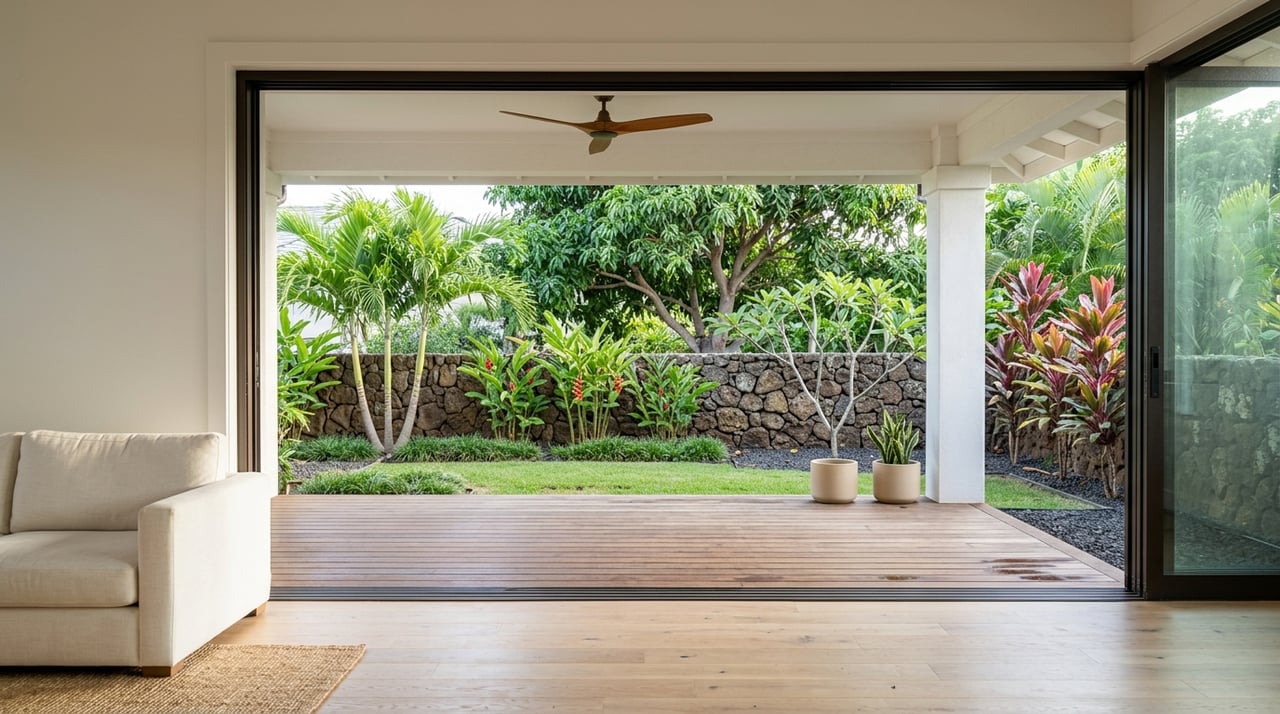
If you are thinking about living in Kaneohe, the first thing to know is this: daily life here often feels shaped by the land, the bay, and the weather in a very real way. You are not just choosing an address on Oʻahu’s windward side. You are choosing a rhythm that tends to be greener, calmer, and a little more weather-aware than urban Honolulu. This guide will help you understand what that looks like in everyday terms, from climate and commuting to errands and outdoor time. Let’s dive in.
Kaneohe’s Windward Setting
Kaneohe sits on the windward side of Oʻahu, where trade winds move moist air up over the Koʻolau range. According to NOAA, that pattern helps create a wetter and more verdant environment than leeward Honolulu. In practical terms, that often means you notice more greenery, more passing showers, and a landscape that feels lush through much of the year.
NOAA climate normals for the Kaneohe Bay MCAS station show an annual mean temperature of 76.6°F. Average daily highs are 81.1°F, and average daily lows are 72.1°F. That helps explain why Kaneohe often feels warm and comfortable year-round, without the kind of major seasonal swings you might expect in many mainland markets.
The same NOAA data shows 27.82 inches of annual precipitation, with wetter months generally running from late fall through spring and drier conditions in summer. For you, that usually means daily plans may need a little flexibility. A quick shower can pass through, the sun can return, and outdoor routines often continue with minor adjustments rather than full cancellations.
What Daily Life Feels Like
One of the biggest lifestyle differences in Kaneohe is that the weather often becomes part of your routine. You may plan a walk, a park visit, or an errand run with an eye on the clouds instead of on a strict seasonal calendar. The trade-wind pattern supports a day-to-day rhythm that feels active and outdoors-oriented, even when the weather shifts.
Kaneohe also tends to feel less urban than central Honolulu. The Kaneohe Town Center plan describes the area as low-rise, low-density, and primarily single-family in character, with a semi-rural scale. If you are looking for a setting that feels more spread out and less high-rise, that is a meaningful part of the appeal.
That does not mean Kaneohe feels remote. It means your day may unfold in a different way. Instead of an urban grid with constant density, you are more likely to experience recognizable commercial hubs, broader residential areas, and a stronger visual connection to mountains, trees, and open sky.
Outdoor Living Around Kaneohe Bay
Kaneohe’s outdoor identity is closely tied to Kāneʻohe Bay. NOAA describes the bay as a sheltered estuarine system protected by a barrier reef, and state sources describe it as a scenic and recreational area used for boating, fishing, kayaking, and snorkeling. For many people, that helps define the lifestyle in Kaneohe just as much as housing style or commute options.
What makes this especially appealing is how naturally outdoor time can fit into ordinary days. In some communities, recreation feels like something you save for weekends. In Kaneohe, shoreline access, bay views, and nearby green spaces can feel more integrated into your weekly routine.
Heʻeia State Park is one example of that easy access to the outdoors. The park offers picnicking, bay views, and no entrance fee, with hours from 8:00 a.m. to 5:00 p.m. and closure on Mondays. For you, that means there is a simple, low-friction option for stepping outside and enjoying the windward setting without turning it into an all-day event.
Hoʻomaluhia Botanical Garden adds another layer to Kaneohe’s daily feel. City materials identify it as a 211-acre park in Kaneohe. That kind of large, landscaped green space contributes to the area’s garden-like atmosphere and reinforces why Kaneohe often feels more peaceful and open than more urban parts of the island.
Outdoor Time Can Be Part of the Routine
If you enjoy places where nature is woven into everyday life, Kaneohe stands out. A short outing can mean bay views, a park stop, or time in a broad botanical setting rather than a long drive to reach open space. That can shape how you spend mornings, afternoons, and even simple breaks in your day.
This is one reason Kaneohe often appeals to buyers who want both residential comfort and a strong connection to the outdoors. You can still handle errands and commuting, but the backdrop to daily life feels noticeably greener and more bay-oriented.
Getting Around Kaneohe
Kaneohe is connected, but getting around is part of the lifestyle equation. The official town plan says seven bus routes serve the community. Route information cited in the research shows connections to places such as Windward Mall, Kalihi, Aikahi, Windward City, and Honolulu-area transit hubs through routes including 60, 61, 69, 85, 87, and 651.
If you use transit, that network gives you multiple options for moving through the area and beyond it. If you drive, your day will likely involve the major windward connectors. The Hawaiʻi Department of Transportation repeatedly points to H-3, Likelike Highway, and Pali Highway as the practical routes linking Kaneohe with the rest of the island.
One helpful thing to understand is that commute experience here is not only about distance. It can also depend on which mountain crossing is moving best on a given day. HDOT closure advisories often direct drivers to use one of the other crossings as an alternate, which shows how route choice can matter in daily planning.
The Town Core Feels More Walkable
The Kaneohe Town Center plan also emphasizes sidewalks, walkways, and transit service in town-center areas. That suggests the local core is intended to be more walkable than the wider suburban fabric. So while Kaneohe is not an urban grid, some errands and shorter trips may feel more convenient when you are near the main commercial areas.
For buyers comparing different Oʻahu communities, this matters. Kaneohe offers connection and convenience, but it is not trying to function like dense downtown Honolulu. It tends to work best for people who appreciate a balance of access, flexibility, and a less urban pace.
Where Errands and Services Cluster
Kaneohe’s conveniences are concentrated into a few familiar nodes. The City and County town-center plan says the Kaneohe focus area includes about 720,000 square feet of existing shops, dining, offices, and services across 23 parcels. Retail is concentrated around Windward Mall and Kaneohe Bay Shopping Center, which gives the area a recognizable commercial center.
That setup can make daily life feel straightforward. Instead of navigating a dense city grid with services on every block, you are more likely to head toward established centers for shopping, dining, appointments, and basic errands. Many residents find that easier to learn and more predictable in day-to-day life.
The same planning document also notes a 73,000-square-foot center with doctors’ offices and community or home-care services. That adds another layer of practical convenience. If you value having daily needs and appointments within the broader Kaneohe commercial corridor, that is part of what supports the area’s livability.
Windward Mall is a major piece of that picture. Its official site says it has more than 100 stores, movie theaters with recliner seating, eateries, ATMs, family restrooms, Wi-Fi, and a children’s play area. For you, that means one stop can cover a wide range of everyday needs, from errands to casual downtime.
Kaneohe’s Housing Feel
From a lifestyle perspective, Kaneohe often feels defined by its scale. The official town plan describes a low-rise, low-density, primarily single-family character. That creates a daily environment that is generally more open and residential in feel than the high-rise districts found in more urban parts of Honolulu.
If you are considering a move here, that built form matters just as much as price or square footage. The spacing of homes, the visible greenery, and the semi-rural tone all contribute to how the neighborhood feels when you leave the house, drive to the store, or look out toward the Koʻolau range. In many ways, Kaneohe’s identity comes from that combination of residential calm and natural setting.
For buyers relocating from denser areas, this can feel like a meaningful lifestyle shift. For local movers comparing Kaneohe with other Oʻahu neighborhoods, it can offer a different balance of space, convenience, and daily scenery.
Is Kaneohe Right for You?
Kaneohe may be a strong fit if you want a place where outdoor access is easy, the setting feels green and open, and the daily pace is more suburban than urban. It can also appeal if you are comfortable with weather that plays a visible role in your routine. The same conditions that create the area’s lush beauty can also make your day a little more cloud-aware and route-aware.
That balance is part of Kaneohe’s appeal. You get connection to shopping and services, access to multiple transportation routes, and a distinctive windward environment that feels different from drier parts of Oʻahu. For many buyers, that combination is exactly what makes Kaneohe memorable.
If you are exploring Kaneohe as your next move, working with someone who understands both the neighborhood feel and the practical side of buying or selling on Oʻahu can make a real difference. For local guidance, neighborhood insight, and personalized support, connect with Laura Ing Baker.
FAQs
What is the climate like when living in Kaneohe?
- Kaneohe has a warm windward climate with an annual mean temperature of 76.6°F, average highs of 81.1°F, average lows of 72.1°F, and 27.82 inches of annual precipitation, with wetter months generally from late fall through spring.
What does daily life in Kaneohe feel like compared with Honolulu?
- Daily life in Kaneohe often feels greener, lower-density, and less urban than central Honolulu, with a semi-rural scale and a routine that is often shaped by trade winds, passing showers, and easy access to outdoor spaces.
What outdoor activities are common around Kaneohe Bay?
- Kāneʻohe Bay is used for boating, fishing, kayaking, and snorkeling, and nearby places like Heʻeia State Park and Hoʻomaluhia Botanical Garden make it easy to enjoy bay views and green space during regular daily life.
How do residents get around Kaneohe and beyond?
- Kaneohe is served by seven bus routes according to the town plan, and drivers commonly use H-3, Likelike Highway, and Pali Highway, with commute conditions often depending on which route is moving best.
Where are shops and services located in Kaneohe?
- Shops, dining, offices, and services are concentrated around the Kaneohe town-center corridor, especially near Windward Mall and Kaneohe Bay Shopping Center, rather than being spread across a dense urban grid.
Is Kaneohe more suburban or more outdoorsy for homebuyers?
- Kaneohe is both, with a low-rise and primarily single-family residential character alongside a strong outdoor identity shaped by the bay, shoreline recreation, and major green spaces.
