Wondering whether your ʻĀina Haina home can support you well for years to come? You are not alone. In Honolulu, planning for aging in place matters more each year, and the best time to think about it is before a sudden need forces a fast decision. This guide will help you look at layout, safety, outdoor design, permits, and support services so you can make thoughtful next steps with confidence. Let’s dive in.
Why aging in place matters in Honolulu
Aging in place is not just a personal preference for many households. It is also a growing local reality. The City and County of Honolulu’s Four-Year Area Plan on Aging says older adults make up about 23% of Honolulu County’s population, with that share projected to rise to 29% by 2040.
That same plan notes that about 66% of Hawaiʻi’s residents age 60 and older live on Oʻahu. It also identifies a clear community goal: helping older adults and people with disabilities remain in accessible, age-friendly settings. If you live in ʻĀina Haina and hope to stay close to your routines, neighbors, and daily comforts, planning ahead can make that goal more realistic.
The planning mindset matters. The National Institute on Aging advises that the best time to think about aging in place is before you need a lot of care. That gives you more room to compare options calmly, budget for changes, and decide whether modifying your current home makes sense.
Start with daily livability
A good aging-in-place design begins with how you actually use your home each day. The goal is simple: reduce strain, lower fall risk, and make movement easier. In many ʻĀina Haina homes, that starts with looking closely at stairs, bathrooms, lighting, and the location of key living spaces.
If your home has more than one level, think about whether you could live comfortably on one level if needed. A main-level bedroom and full bath can make a big difference over time. Even if you do not need that setup today, planning for it now can help you avoid a rushed remodel later.
Flexible rooms are also valuable. A den, office, or guest room may serve a new purpose later, such as a caregiver room, quiet recovery space, or ground-floor sleeping area. That kind of flexibility supports gradual change instead of forcing an all-at-once move.
Focus on fall prevention
Many of the most helpful changes are not flashy. They are practical, safety-first upgrades that make everyday life easier. The National Institute on Aging recommends features such as ramps with handrails, secured or removed area rugs, better lighting, grab bars, and nonslip surfaces.
These changes can support comfort without changing the character of your home. Good lighting in hallways, entries, bathrooms, and stairs can improve visibility right away. Grab bars in bathing areas and nonslip flooring in wet spaces can help reduce risk where slips are more common.
Honolulu Fire Department guidance adds another important point: keep paths to exits clear of trip hazards. That means cluttered walkways, loose rugs, and obstructed doorways deserve attention too. Aging in place works best when your home is both comfortable and easy to navigate.
Plan bathrooms and entries early
Bathrooms and home entrances are often the first areas where design challenges show up. If stepping over a tub wall, climbing porch steps, or moving through a narrow entry already feels inconvenient, those issues usually become more significant with time.
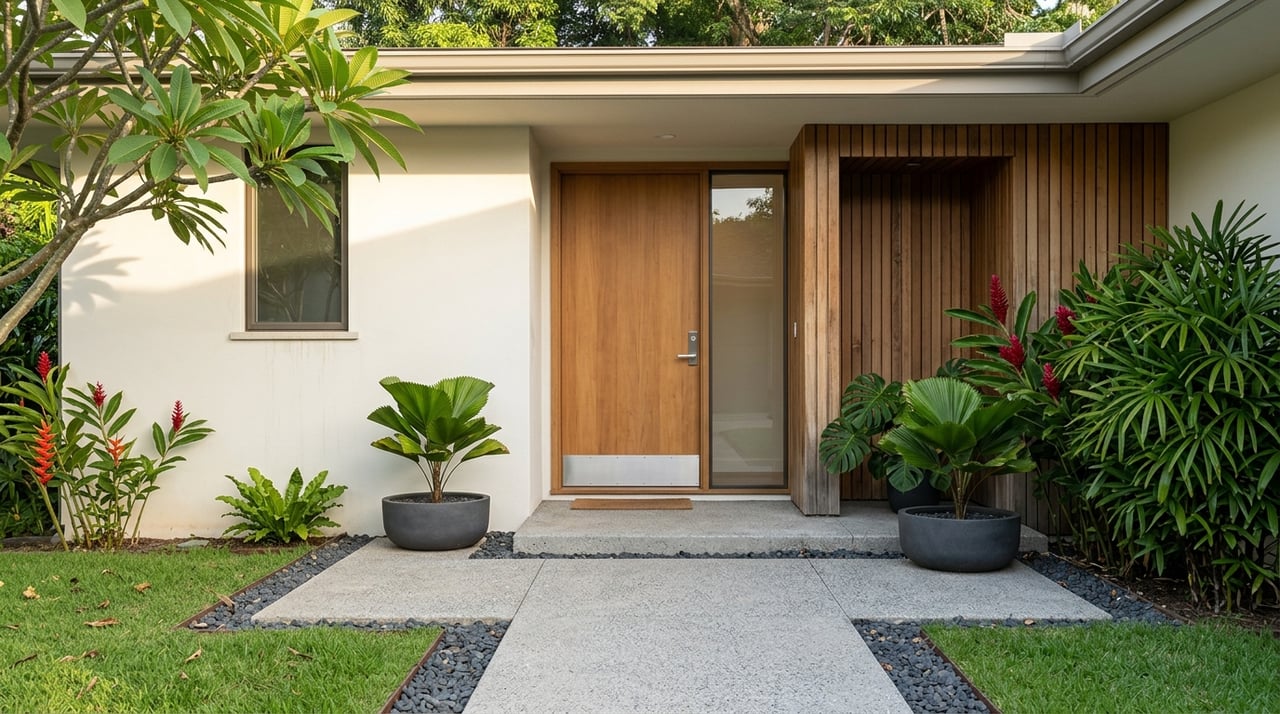
A thoughtful entry plan may include a ramp with handrails or a smoother path from parking to the front door. Inside, a bathroom update may focus on grab bars, nonslip surfaces, and a layout that is easier to use safely. If your renovation involves plumbing, structural work, or a larger accessibility change, it makes sense to discuss it with a licensed contractor early.
In Hawaiʻi, the Department of Commerce and Consumer Affairs says a contractor license is required for projects exceeding $1,500 in labor and materials or for work requiring a building, electrical, or plumbing permit. The same agency advises homeowners to verify a contractor’s license. That step can help you avoid preventable problems before design choices become permit issues.
Make fire safety part of the plan
Aging in place is also about emergency readiness. Fire safety should be part of your design conversation, not a separate checklist for later. Honolulu Fire Department guidance says a working smoke alarm can increase survival chances by more than 50%.
The department recommends smoke alarms on each level of the dwelling unit, including basements. Just as important, exit routes should stay clear and easy to use. If mobility changes over time, a blocked hallway or a poorly planned bedroom location can become a serious concern.
It helps to review your fire escape plan while you are already thinking about layout and safety improvements. A home that feels manageable during everyday life should also support a safer response during an emergency.
Consider multigenerational options carefully
Some ʻĀina Haina homeowners think about adding extra living space for family support or future caregiving. That may sound straightforward, but it is important to separate a family-use idea from a legally compliant dwelling plan.
In Honolulu, the Land Use Ordinance uses the term accessory dwelling unit, or ADU. An ADU may be created by building a new attached or detached structure or by converting a legally established structure, attic, or basement, but written confirmation must first show that wastewater treatment and disposal, water supply, and access roadways are adequate to support the unit.
That means a spare room, interior conversion, or informal suite is not automatically a lawful ADU. Before assuming a change will qualify, confirm zoning and permit requirements. If you are exploring whether to adapt your current property or move to a home with a more workable layout, this is an area where early guidance can save time and money.
Design outdoor areas for ease
Outdoor spaces matter in ʻĀina Haina, especially in Honolulu’s warm year-round climate. Climate normals show mean monthly temperatures in the 70s to low 80s Fahrenheit, so outdoor comfort often depends more on shade, airflow, and durable materials than on creating enclosed exterior rooms.
For aging in place, think about how easy your yard and walkways will be to maintain. Simple paths, stable surfaces, shaded sitting areas, and manageable planting beds can all support long-term use. A lower-maintenance exterior may also reduce ongoing effort and cost.
If your property is closer to the coast or exposed to salt air, landscaping choices matter. Hawaiʻi Cooperative Extension notes that beach-area gardens can suffer salt damage and that salinity issues are often tied to poor drainage. Salt-tolerant plants and well-drained soil can support a simpler, more resilient landscape plan.
Watch drainage and grading issues
Outdoor upgrades sometimes involve more than plants and paving. If your project includes regrading, drainage changes, retaining work, or new hardscape, permitting may come into play.
Honolulu’s grading checklist says a grading permit may be required when grading exceeds 50 cubic yards, when cut or fill exceeds 3 feet, or when work changes drainage patterns that affect neighboring properties. Separate thresholds can also apply to grubbing and stockpiling. If your aging-in-place plan includes major site work, it is smart to ask these questions before construction begins.
This is especially relevant if you are trying to improve access from the street, create safer walkways, or reshape sloped areas of a property. A practical outdoor design should support easier movement while also respecting site and permit requirements.
Use local support services in your decision
Aging in place is not only about the house itself. It is also about whether local services can help you stay independent. Hawaiʻi’s Executive Office on Aging says home and community services can include assisted transportation, attendant care, case management, chore services, home-delivered meals, homemaker support, and related help.
Honolulu’s ADRC and Elderly Affairs Division also provide information and referral, along with assessments of frail and homebound elders and other support services. For many families, these resources are part of the decision-making process. They can help you evaluate whether staying in your current home is realistic, what support may be available, and where a move might make life simpler.
That is why aging in place should be viewed as a proactive process. The key questions are whether your current home can be made safer, whether the property supports the needed changes, whether services and caregiver support are available, and whether the long-term cost of modifying the home makes more sense than buying a more manageable one.
When staying may not be best
Sometimes the right answer is not a major remodel. If your home has challenging stairs, difficult site access, or a layout that would require extensive changes, moving may be the more practical long-term choice.
That does not mean giving up on comfort or neighborhood connection. It means weighing your options honestly. In some cases, a different home in or near ʻĀina Haina may offer better one-level living, easier access, and lower maintenance from day one.
A careful real estate conversation can help you compare the cost of improvements against the value of right-sizing. If you are selling a longtime home, thoughtful pre-sale preparation can also make the transition smoother and help you present the property well in the market.
Designing for aging in place is really about creating more choices for your future. Whether that means adapting your current ʻĀina Haina home or exploring a more manageable next move, thoughtful planning now can protect your comfort, safety, and peace of mind later. If you want local guidance on evaluating your home, planning a senior-focused move, or comparing stay-versus-move options in East Oʻahu, connect with Laura Ing Baker.
FAQs
What does aging in place mean for an ʻĀina Haina homeowner?
- It means planning for your home to remain safer and easier to live in as your needs change, often through layout, safety, and maintenance improvements.
What home features support aging in place in Honolulu?
- Helpful features can include a main-level bedroom and full bath, improved lighting, grab bars, nonslip surfaces, ramps with handrails, and clear exit paths.
What should homeowners know about ADUs in Honolulu?
- A family-style suite or converted room is not automatically a legal ADU, so you should confirm zoning, access, water, and wastewater requirements before assuming a conversion will qualify.
When do you need a licensed contractor in Hawaiʻi?
- Hawaiʻi requires a licensed contractor for projects over $1,500 in labor and materials or for work that requires a building, electrical, or plumbing permit.
What outdoor design choices help with aging in place in ʻĀina Haina?
- Lower-maintenance walkways, shaded seating areas, stable surfaces, good drainage, and simpler planting plans can make outdoor spaces easier and safer to use over time.
What local services can help older adults stay at home on Oʻahu?
- Local support may include transportation, chore services, homemaker help, meals, case management, and information or assessment services through Honolulu’s aging network.
